Wednesday, April 6, 2011

Machiavelli and Modern Politics

Machiavelli said that the highest virtue was whatever allowed the prince to survive politically.  This may not always express itself in the survival of the state; many politicians believe the ends justify the means they use in their own ideological pursuits.  They may not call this Machiavellian, but clearly it fits  his idea of virtue.

Of course no respectable political leader would admit to engaging in Machiavellian ethics.  That being said, I thought it would be interesting to try and find examples of Machiavelli's influence on modern politics, using a few words from Machiavelli himself.

A prince never lacks legitimate reasons to break his promise.

"Read my lips", this is practically a maxim among politicians.  Saying one thing and doing another is second nature to most successful politicians.  Of course this can backfire, therefore breaking promises is best used only for preserving political position. For example, promising not to raise taxes can get you elected president, but don't break that promise until your second term. 

Hatred is gained as much by good works as by evil.

Here Machiavelli is saying that even when we try to do good deeds, we often do evil.  In other words, be prepared for people who will not like you, even when you are trying to help them.  This continues to happen to the US throughout the world.  Remember our relief missions to Somalia?  Bombing Yugoslavia?  The wars in Iraq, Afghanistan and now Libya?  We think we are doing good, but we just seem to be making more enemies. 

In this country health care reform, granting everyone access to medical care, is ostensibly a good thing but many view this change with hostility.  Likewise, many shortsighted people in the middle class vehemently resist higher taxes for the wealthiest 2% - even though it can only help them and the economy.  Similar views can be found when we try and make people wear seatbelts, buy car insurance, avoid predatory mortgages, etc...
.
It is better to be feared than loved, if you cannot be both.

If you cannot make everyone love you, make them fear you but never make the people hate you.  Being loved is great, but fear has worked well for other countries (USSR and Nazi Germany) and many countries have loved or feared the US.  However, once people begin to hate you will have lost respect and potential allies. Many countries have contempt for the US which is one reason we have lost influence on the global stage.  
.
I'm not interested in preserving the status quo; I want to overthrow it.

This has been uttered by Marxists, Fascists, Liberals, Conservatives, etc...  Of course Machiavelli does want to preserve the status quo as far as staying in power goes.  Machiavelli also said that when taking power,  the prince should eliminate the old nobility and replace it with new more loyal followers.  This would literally be true in more extreme situations, but even in our democracy a new president wants his most trusted allies in key positions. Machiavelli also suggested making the rich poor and the poor rich which will help endear a new monarch to the masses. 
Necessity justifies behavior that is not considered moral normally

With our war on terror we justify military tribunals and suspension of habeus corpus as "necessary". We should remember that Lincoln also suspended habeus corpus during the Civil War and FDR illegally interned Japanese-Americans during WW2.   But as Machiavelli says, a state and a prince can do whatever is necessary to preserve the government.   It could be argued by Lincoln, FDR, GW Bush and Obama that they are only doing what is required to protect us (i.e. the government) out of necessity.

It is necessary for him who lays out a state and arranges laws for it to presuppose that all men are evil and that they are always going to act according to the wickedness of their spirits whenever they have free scope.
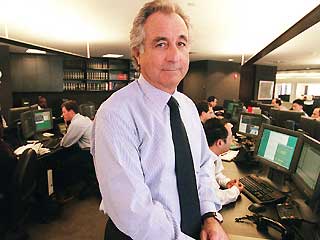
Thomas Aquinas wanted us to believe that most men are good and only a view needed to be directed toward virtue.  Machiavelli took a more pragmatic, realistic view.  We need laws in our country to protect our freedom and property from other people.  People are inherently self-interested and nearly everyone seeks to acquire more resources than they need for survival. We can find innumerable examples of this without even mentioning Wall Street, the predatory mortgages, pyramid and Ponzi schemes.   Laws should protect the prince, his government and his people from these evils. 

Of course the prince does not need to follow these laws - but he should appear to follow them.  

The first method for estimating the intelligence of a ruler is to look at the men he has around him.

Machiavelli thought that good counsel was critical for a successful prince.  Abraham Lincoln was known for his "Team of Rivals" and other presidents and leaders have depended heavily on their cabinets.  However, bad counsel can lead to ruin - ask Tsar Nicholas II about how Rasputin worked out.  I also imagine someone told Nixon that breaking into the Watergate hotel was a good idea. 

For among other evils caused by being disarmed, it renders you contemptible; which is one of those disgraceful things which a prince must guard against.

You need a strong military to reflect your strength and keep away "wolves".  Germany and Japan instigated WW2 in part because they considered the Allies to be weak.  Our country uses its military as a deterrent to other countries that would threaten us - although it does not always work.  Likewise, it could be argued that Saddam Hussein kept up the ruse of having WMDs to keep his neighbors wary of him.   
Machiavelli also stressed the importance of citizen-soldiers, rather than hired mercenaries.  Like our military, no one has more at stake in preserving a government than those who freely choose to defend it.

The one who adapts his policy to the times prospers, and likewise that the one whose policy clashes with the demands of the times does not. 

All politicians needs to read the political tea leaves.  If you want to stay in power, you need to be on the right side of political issues like segregation in the South, busting up or supporting unions, or going to war.

There is nothing more difficult to take in hand, more perilous to conduct, or more uncertain in its success, than to take the lead in the introduction of a new order of things.

Every time someone in our country tries to change the status quo, like fixing health care or social security, they run into a barrage of opposition.  A prince has to have all the characteristics listed above to be able to push his new political agenda.  He is confident, secure at home and abroad, has good counsel and is willing to do whatever it takes to achieve his goal. 

Tuesday, April 5, 2011

Machiavelli: The Prince and Political Philosophy

Is The Prince an amoral or immoral book, or just misunderstood?

Machiavelli said that sometimes a prince must disregard accepted standards of virtue and "enter into evil as necessitated". However, if maintaining the State is the prince's most important job, then can we really say that anything he does is wrong? After all, if the State falls then we could lose everything (freedom, property, our culture and laws) so shouldn't we let the prince do whatever it takes to maintain power? The prince is intimately linked to the state, as the French king Louis XIV famously articulated, L'État, c'est moi" ("I am the State"), therefore if the prince falls, the state falls.  Likewise, as Aristotle said in Politics, the chief aim of any government is the preservation of the State. Therefore we should expect that a successful  prince will do anything he needs to do to stay in power. 

Cesare Borgia - the ideal prince
Machiavelli dedicated The Prince to Lorenzo di Piero de' Medici, grandson of "Lorenzo the Magnificent", of the ruling Florentine Medici family. However, Machiavelli's ideal "prince" would have been Cesare Borgia (Chey-zer-ay Bor-zheh). A member of the notorious Borgia family (Cesare's father was Pope Alexander VI), Cesare conquered territories using both the art of war as well as guile. He found trusted advisers (even hiring Leonardo da Vinci as a military architect and engineer) and ruled fairly. However he could be duplicitous when necessary and dealt out punishment quickly and brutally. For this, Machiavelli admired him, saying that Cesare's only downfall was that he depended too much on his father (the Pope) since when he died Cesare's fortune was lost.

Comparing Machiavelli with classical political philosophy

Machiavelli's political treatise The Prince at first appears a significant departure from the political philosophy passed down from Plato and Aristotle. Machiavelli assumed that all men wanted power and could not be trusted. The sovereign must be prepared for these challenges and do anything he needs to do to maintain power. Because of this he said a prince must have the character of both a fox and lion, "It is necessary to be a fox to discover the snares and a lion to terrify the wolves"

Aristotle

Aristotle thought that men should be civil and avoid acting like beasts. He says in Politics that man "when perfected, is the best of animals, but, when separated from law and justice, he is the worst of all". However, Machiavelli could say that by maintaining the power of the State, the prince is protecting men from injustice.  In addition, the prince acting like a beast means that his subjects won't have to.

Plato

In the Republic, Plato has Glaucon talk about the story of the Ring of Gyges which could make a man invisible. Although all men claim to be honorable, if we could get away with something unbeknownst to others, wouldn't we try? Glaucon continues saying that the unjust man who appears just will not be punished while "the just man who is thought unjust will be scouraged, racked, bound....then he will understand that he ought to seen only, and not be, just." Mind you these are not Socrates or Plato's words.

Machiavelli says that the Prince should be like the Ring of Gyges; he should appear honorable and just, but, unseen, he should do whatever he needs to stay in power. Even Plato said that in an ideal state it was OK for the sovereign to lie. This is the "royal lie" which allows the ruler to give the impression of being just but allows him the freedom to pursue ulterior agendas. 

Thomas Aquinas

Aquinas said that laws should be written with the common good in mind. Machiavelli would say that that laws serve only to help keep the ruler in power. However, if keeping the ruler in power is the best end for the people, then technically Machiavelli is fulfilling the ideas promulgated in the Summa Theologica.

At first the ideas of Machiavelli may seem to disagree with earlier political thought, however, Machiavelli can find support and justification for his theories using the same works he seems to be contradicting. Although we should recognzied that justifying every action of a prince may only apply in extremis, when the very survival of the society is at stake. 

Niccolo Machiavelli

The term Machiavellian is used to describe someone who is willing to deceive and manipulate other people for personal gain - it usually carries a negative connotation.  However, for rulers in Renaissance Europe, following the principles of Niccolo Machiavelli could be the key to staying in power. Even today Machiavelli is regarded as the father of modern politics largely through his book       The Prince, an instructive manual on gaining and maintaining political power.


Machiavelli (1469- 1527) was born in Florence, Italy during the peak of the Renaissance. Florence was the home of Leonardo da Vinci, Michelangelo, Dante, the famous Medici family and a cultural, economic and political powerhouse. Machiavelli began a career as a public servant of the Florentine Republic. Later he developed a reputation as a political philosopher, military strategist, writer and famous playwright. This was a tumultuous time in Italy with wars occurring between the numerous city-states (Genoa, Venice, Florence, Naples, Milan), conflicts with the Pope, and outside armies marching through Italy from Spain, France, Switzerland and Germany.  It was a world of shifting alliances, treachery and the overthrow of governments by both internal and foreign forces. What intrigued Machiavelli the most was understanding why some governments succeeded and others failed.  What was the key to staying in power? 

In response to this question, Machiavelli wrote The Prince, a guide to acquiring and preserving power.  In this treatise Machiavelli lays out his instructions for sovereigns who have recently come to power.  He discusses how to deal with the citizenry, what types of governments are easiest to control, how to organize the military and what to look for in your counsel.  In many ways The Prince reveals things that most politicians already know.  For example, you should appear upright and honest, but feel free to be covertly ruthless and deceitful. His message laid out in The Prince has been studied for centuries and has been said to influence numerous politicians from diverse backgrounds (communists, fascists, republicans and democrats) such as Lenin, Lincoln, Mussolini, Napoleon, etc.  Some leaders have been directly affected by Machiavelli, while others have, perhaps unknowingly, followed the ideas promulgated at this book. The writings of Machiavelli have been, and will continue to be, interpreted multiple ways and used for many purposes, but the goals have always remained the same. 

Machiavelli's political children
There is still controversy about what Machiavalli really meant in The Prince, especially since he also wrote about the need for a Republic, such as Florence. I've read this work twice and I continue to find new ways of interpreting it.  Most intriguing for me now is seeing how The Prince relates to other works on political theory, and how it can be interpreted today.  Even though we will never know exactly what Machiavelli is trying to tell us, people are likely to continue using his ideas to justify their political ambitions.

Tuesday, March 29, 2011

Summa Theologica and Human Law

Where do Human laws come from? 

Aquinas says that "justice has its course in nature; thence by reason of their utility; afterwards these things emanated from nature and were approved by custom, were then sanctioned by fear and reverence for the laws."

In other words - utility becomes custom, custom becomes law. This reminded me of my post on Montaigne who was amazed at how much value we attach to custom (which originally came from utility, and apparently contributes to laws).  Of course some laws arrive less organically to protect the common good. 

What gives the law authority over us?

The origin of the word for law (Latin: lex) is derived from ligare (to bind) because we are obliged (obligare) to follow the commands of others for the common good.  But do we need to follow laws, especially Human laws?  Aquinas says that all power comes from God, including the power to make Human law.  Therefore, to break Human law is to break Divine law. That sounds like a no-no. 

Are laws designed to make men good or to punish?

Aquinas says laws are to encourage virtue and to quote Aristotle, "lawgivers make men good by habituating them to good works".   Aquinas follows adding that "accordingly, law, even by punishing, leads men to being good". It is an interestingly view - do we still think that punishment makes men good?  From my experience working in a prison, the answer would be no.

Who is entitled to make laws?
In principle the making of a law belongs to all people, although in practice it is the lawgiver (sovereign) who writes the law with the "common good" in mind. Aquinas probably would be surprised that in a country of our size the power to make laws actually does rest with the masses. Laws that focus on the "true good" need to be followed.  However "tyrannical laws, since it is not in accordance with reason is not a law, absolutely speaking, but rather a perversion of law" do not need to be obeyed. 

What is a good law?

Laws should be codified and general, which limits the partiality of judges to only very specific cases.  "Human laws do not need to forbid all vices, from which the virtuous abstain, but only the more grievous vices from which it is possible for the majority to abstain".  That does make a law easier to follow - one that we would agree to follow anyway.  Over all, Human laws should further the common good, help discipline and foster Divine law.

Who is above the law?
Notably, holy men are not subject to Human laws in so far as they contradict with Divine law.  Also, lawgivers do not need to follow their own laws, although they may suffer God's reproach.  Finally, "laws are not made for the just man".  Fortunately for me I think of myself as a very just man; therefore that 55 mph speed limit doesn't apply to me...officer. 

Summa Theologica, Law and Religion

Who is entitled to make laws?  What gives the law authority over us? Thomas Aquinas believed that the authority and the power to make laws came from God.  This belief has been instrumental to the development of our legal and political system (e.g. "Under God the People Rule").  Just as important is the belief that there is a supreme being who is watching us and whose divine justice we cannot avoid.

My assignment was to read questions 90-97 of the Treatise on Law, which is set up as a series of queries, each containing several objections which Aquinas responds to in turn.  Here is an outline of these questions: 90-92 treat law in general, 93 addresses Eternal law, 94 questions Natural law and 95-97 focus on Human law.  Aquinas often cites Scripture as well as former church leaders (e.g. St. Augustine) in his responses.  Most significant are his references to Aristotle whom he calls "the Philosopher".  I am quite fascinated at how adeptly Aquinas incorporates the philosophy of an ancient Greek pagan into Christianity.

There are four types of law in order of importance: Eternal, Divine, Natural and Human.  Divine power gives the lawgiver of a society the ability to produce laws, but only when these laws consider the common good.
.

Divine Law

Eternal law supersedes everything as it rests with God.  Divine law descends from this and consists of the Old and New Testaments.   Divine law punishes those that avoid Human and Natural law.   According to Aquinas, the Old (Testament) laws depended on temporal rewards and fear while the New laws promoted eternal rewards and depended on love.  The Old laws were written for "children" but the New laws are made for "adults". It makes me wonder what we would be if we didn't need Divine laws.  Indeed Aquinas does say that the virtuous man does not need laws, therefore it is possible. However, who determines who is virtuous?

Don't sin, unless God says its OK. 

The Natural law is the pursuit of the good, which is the natural inclination of all creatures. It contributes to Human law, involves "reason", and doing what is virtuous (following your conscience). Interestingly, as Aquinas says, Natural law can be changed by instances such as "by the command of God, death can be inflicted on any man, guilty or innocent without any injustice whatever.  In like manner adultery is intercourse with another man's wife who is allotted to him by the law emanating by God. Consequentially intercourse with any woman by the command of God is neither adultery nor fornication.  The same applies to theft".  Therefore, laws do not apply to God or his servants. Let's hope people think God's on your side.

How do these laws work together?  If for example you murder someone you break three laws:

1) Divine Law: Thou shall not murder
2) Natural Law: Murdering is irrational and against the common good
3) Human Law: Murder is a crime

Thomas Aquinas

The sixth reading in the GBWW series for Year Two is the Treatise on Law in the Summa Theologica written by Thomas Aquinas (1225-1274).  Born near Naples, Italy to a noble family (his uncle was Fredrick Barbarossa), Aquinas had numerous opportunities available to him.  Therefore it was a great surprise to his family when he took the habit of the Dominicans and began studying theology at the University of Naples. Continuing his education in Paris he was introduced to Aristotle, recently re-discovered from Arabic sources.  Aquinas readily embraced and incorporated Aristotle (whom he called "the philosopher") into Christian theology and translated Aristotle directly from the Greek texts.   

Aquinas entered a university career teaching in Paris (later in Italy), and was recognized for his extraordinary skill and acumen. In 1269 he returned to Paris as the debate regarding the synthesis of Aristotle and Christianity was reaching its climax.  Aquinas successfully refuted the Latin Averroists and the Augustians who thought Aristotle was incompatible with Christianity.  This firmly established the union between ancient Greek philosophy and Christian theology which persists to this day.  It also cemented the reputation of Aquinas as the leading scholar in the Catholic Church. 

Aquinas is regarded as a Doctor of the Catholic Church and one of its most important philosophers and theologians.  His greatest work is the Summa Theologica, a voluminous manual that was written to instruct believers on issues of theology such as the existence of God, the need for God's laws, the sacraments, etc.  Aquinas frequently cites St. Augustine, Aristotle, other Christian, Jewish and Muslim scholars as well as Scripture.  Since Year 2 of the GBWW is focused on law and political theory, I will be only be reading the section Treatise on Law which deals with the development, necessity and types of law in human society.

Monday, February 28, 2011

The Fountainhead

The Fountainhead revolves around the life of Howard Roark, a young uncompromising, innovative architect who designs buildings which reflect his own creative spirit.  He does not imitate other architects or seek to incorporate classical designs from Ancient Greece, Rome or the Renaissance. A few people recognize the creative genius in Howard's designs. However most critics and the hoi polloi regard his work as grotesque or the projections of an egotist seeking to glorify his own soul.   That is the point - Howard is the supreme egotist.  These works are pulled from Howard's pure, free-thinking spirit, his identify, which is why they are so unique.

The Fountainhead has the best villain in any book I have read - Ellsworth Toohey.  Toohey is a brilliant writer, skillful orator, a leading architectural critic and Howard's implacable foe.  He is also one of the few people who recognize Howard's greatness, which is why he must destroy him.  Toohey desires equanimity in society; he does not want anyone to rise above the rest; he seeks conformity and unity.  He does however hide a secret agenda. While Toohey publicly gives away his own money and lectures on the rights and needs of the poor, he furtively maneuvers himself to gain power over other men.  Under the guise of magnanimity and altruism, Toohey is a duplicitous, manipulative power-hungry genius.  He's possibly the only character I know who could stab you in the back while getting you to agree it was for your own good.  Toohey tries to turn the public against Roark, attacking him in public through his newspaper column or by sabotaging deals with potential clients. Time and time again Roark loses clients, falls into debt, and closes his office only to come back renewed and stronger. 

Roark's devotion to his spiritual compass in contrasted with other characters in the novel.  Roark's friend and fellow architect Peter Keating is portrayed as an anti-hero - he has gained all the monetary rewards and recognition that his career can offer him but he is a fraud.  Keating gets his influence from classical buildings, does not have his own ideas, panders to the public desire and even claims Roark's drawings as his own. He is without a soul, but Toohey considers him the perfect tool to use against Roark.  In addition, Roark meets the newspaper magnate Gail Wynand, the most powerful man in New York City and they become intimate friends.  The Wynand newspapers play to the masses need for sensationalism. However, Wynand has never sacrificed his own personal integrity, which is what he has in common with Roark. Both men share the same passions and speak from their souls. However, Wynand has chosen a different route than Roark and values money and power.  At the end of the novel Wynand is undone when he has to choose between his principles and his financial empire. 

Ultimately, Roark comes out victorious by remaining true to himself, which is in no small part to his sense of purpose and supreme confidence. His enemies and the masses of people call him an egoist, although Roark celebrates this appellation.  "We must be selfish, without the self there is nothing." He doesn't live his life for other people, but for himself.  His self-esteem is not based on other people's opinions. His happiness is a private thing, his greatest moments are personal.  He can still love other people, but he does not live his life  for the benefit of anyone else. 

The Fountainhead is a long book and sometimes Rand presents her philosophy in rambling character dialogues that last several pages - it feels like being lectured to.  However, I did enjoy the read and I can appreciate the important points she raises about the significance of the individual.  I also agree that we should not base our happiness on the opinions of others or try to conform for its own sake. 

As Schopenhauer said, "We forfeit three-quarters of ourselves in order to be like other people".

Sunday, February 27, 2011

Ayn Rand


Ayn Rand
I just finished reading "The Fountainhead" for one of my book clubs. Even though this is not one of the GBWW, it is still a modern classic for several reasons. Ayn Rand (1905–1982) was a Russian-American writer and philosopher who is best known for her books "The Fountainhead" and "Atlas Shrugged".  Born in St. Petersburg, Russia to upper-middle-class parents, she immigrated to the US in 1925 under the pretense of studying the American film industry.  Early in her life Rand embraced the intrepid American entrepreneurial spirit and independence of thought.

In contrast, she maintained a passionate animosity toward the collective ideals of Communism, Fascism, the welfare state and other forms of national conformity and unity.  This is reflected in her writing which she promotes the individual, the creative spirit, the isolated man who stands against the tide of humanity. She called her philosophy "Objectivism" and it is still taught and promoted by the Ayn Rand Society, a sub-group in the American Philosophical Association.

 Ayn Rand has been called one of the most influential writers of the 20th Century.  The heroes in her novels are innovative, free-thinkers who identify with meritocratic American ideals. In "The Fountainhead" the hero is Howard Roark, a young architect who designs buildings which reflect his own creative spirit. He does not care what the masses want and most of his clients know that. The people who understand Howard realize that he will design completely unique buildings that are incomparable to anything else.   Howard persistently pursues his own ideals and beliefs and this is personified in the buildings he designs and sees constructed. However, to most people, the structures that Howard creates are met with apathy or outright hostility.  He creates several powerful enemies but also finds kindred spirits who can appreciate Howard's genius.  Howard must resist the people who try to destroy him and his buildings, who want to crush his spirit and make him conform to the standards of modern architecture.

Rand identifies the character of Howard with other visionaries from history such as Columbus, Copernicus, Galileo. Initially these mean were misunderstood and ridiculed but their ideas propeled  the progress of humanity forward, even if they were not appreciated at the time.  The point is that one cannot let other decide what is right for us, that we each need to follow our own course and we should not feel compelled to follow the majority simply because it is the majority.